Jan 12, 2026
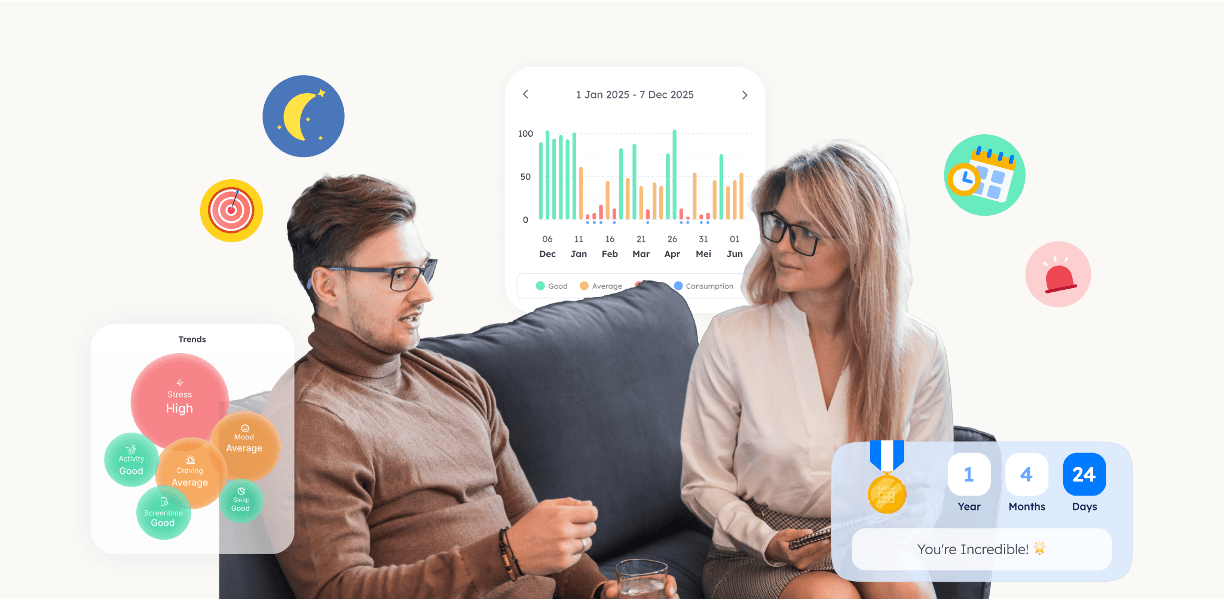
This article explores how modern technology, such as digital support tools, can assist individuals in recovery to better understand their triggers and strengthen their long-term stability, complementing personal insight and support networks.
Congratulations on the progress you've made in your recovery journey. Taking steps to stop using substances is a significant achievement, a testament to your strength and commitment. Yet, as many in recovery know, the journey continues beyond that initial step. While substance use may stop, the underlying triggers that once led to it often do not simply disappear.
Understanding these triggers is not a sign of weakness; it’s a powerful strategy to protect your hard-won progress and build lasting stability. This article explores how technology can support self-awareness and help people in recovery better understand their triggers - without replacing human judgment or personal insight.
Understanding Triggers in Recovery
It’s vital to ground the concept of triggers in a supportive context. In recovery, triggers are not failures, nor are they automatic warning signs of relapse. Instead, they are internal or external cues that can increase stress, discomfort, or vulnerability, potentially making you feel more susceptible.
These cues can persist long after you’ve stopped using substances. They might be:
Emotional states: Feelings like stress, loneliness, frustration, or even overwhelming joy.
Situations: Specific environments, times of day, work pressure, social fatigue, or even a lack of sleep.
Physical states: Exhaustion, illness, hunger, or sensory overstimulation.
Having triggers does not mean you’re doing recovery wrong - it means you’re human. Recognizing them is a critical step in building robust coping strategies and reinforcing your long-term recovery.
Why Triggers Can Be Hard to Notice on Your Own
Identifying triggers might sound straightforward, but our human memory and perception have limitations. This is where technology offers a unique advantage.
Triggers Are Often Subtle
Triggers are not always dramatic or obvious events. They often show up as subtle shifts: a creeping mood change, a feeling of tension in your shoulders, or a quiet restlessness. These gentle nudges are easy to overlook in the bustle of daily life.
Patterns Are Hard to See Day-to-Day
Each day can feel like a random collection of moments. It’s challenging to connect the dots between a rough afternoon two weeks ago and a restless night last month. Meaningful patterns, especially those related to our emotional and physical states, only become visible when we look at data over an extended period.
Memory Is Influenced by Emotion
We tend to remember intense, high impact moments more vividly. The gradual build ups - the sequence of minor stressors or subtle physiological changes that lead to a difficult moment - often fade from memory. This natural human tendency creates an opportunity for technology to add objective value, helping us see what our memory might gloss over.
What Technology Can (and Cannot) Do
Setting healthy expectations for technology’s role is crucial in recovery.
What Technology Can Help With
Technology, particularly digital support tools like coobi care, can be incredibly helpful for:
Spotting patterns over time: It can collect and organize data on your mood, sleep, and daily activities, making long-term trends visible.
Linking internal states with difficult moments: By tracking various data points, you might start to see correlations between, for instance, poor sleep and increased stress levels.
Increasing awareness without judgment: The data simply presents information, allowing you to observe and reflect without the emotional weight of self criticism.
What Technology Cannot Do
It’s equally important to understand technology’s limitations:
It cannot make decisions for you: Your choices and judgment remain paramount.
It cannot replace self reflection or human support: These are foundational elements of recovery.
It cannot “prevent” emotions or stress: Life will always present challenges, and technology won’t make them disappear.
Technology supports awareness - it doesn’t override your autonomy. It’s a tool to empower you, not to control you.
Types of Data That Can Support Trigger Awareness
You don’t need to be a tech expert to benefit from digital support. Many simple types of data can offer profound insights.
Mood and Emotional Check Ins
Many apps offer quick, regular check-ins where you can rate your mood or note prevailing emotions. Over time, these brief reflections help identify emotional patterns and make your internal states visible, highlighting days or times when you might be more vulnerable.
Stress and Physiological Signals
Stress often manifests in the body before the mind fully registers it. Wearable devices, for example, can monitor physiological signals that may indicate elevated tension or restlessness. Recognizing these bodily cues can serve as an early signal that you might be approaching a vulnerable state.
Sleep Patterns
Disrupted or poor sleep significantly increases emotional sensitivity and can heighten the impact of triggers. Tracking your sleep patterns can reveal how a lack of quality rest might be making you more susceptible to stress or discomfort, making triggers feel stronger.
Daily Routines and Transitions
Triggers often cluster around specific times or transitions: evenings, after work, before bed, or following intense social interaction. By logging routines or key daily events, technology can highlight these recurring moments of vulnerability, helping you prepare.
How Tracking Can Strengthen Recovery, Not Control It
This is where the real value of digital tools comes into play. Technology doesn’t tell you what your triggers are - it helps you see them by organizing information in a way your brain naturally struggles with.
Imagine noticing through your tracked data:
“My difficult days often follow poor sleep.”
“My stress peaks on certain workdays or after specific social events.”
“I feel more vulnerable when my usual routines are disrupted.”
These connections become apparent when data is collected consistently. It transforms individual, seemingly random moments into recognizable patterns, offering you concrete insights into your unique vulnerabilities and resilience. A digital support tool like coobi care, for instance, can help you recognize and reflect on changes in your behavior and condition, providing a personalized view of these patterns.
Using Technology Without Becoming Over-Focused or Anxious
For those in recovery, it’s especially important that awareness feels supportive, not obsessive. The goal is to enhance your well-being, not to add another layer of stress or anxiety.
Remember that data is information, not judgment. It’s simply a reflection of what’s happening, not a critique. It’s also perfectly okay to step back from tracking if it starts to feel overwhelming or becomes a source of anxiety. Your mental peace always comes first.
Approach technology with gentle curiosity and flexibility. Trust your inner wisdom over numbers, and use data as a prompt for self reflection rather than a strict set of rules.
Turning Awareness Into Protection, Not Control
Insights gained from technology are most powerful when they translate into practical, protective actions. This isn’t about controlling every emotion; it’s about preparing and strengthening yourself.
Anticipating Harder Days
If your data suggests certain patterns, you can plan ahead. For example, if you know poor sleep makes you vulnerable, you can proactively schedule extra rest, reduce expectations for demanding tasks, or increase your support outreach on those days.
Strengthening Coping Strategies
Awareness empowers you to choose the right coping tools at the right time. Recognizing an early trigger might prompt you to engage in grounding activities, set healthy boundaries, or consciously turn to your established recovery tools before a situation escalates.
Reinforcing Progress
Seeing patterns also highlights your resilience. Many people notice how much they’ve already stabilized, how far they've come in managing difficult moments, and how consistently they apply their recovery skills. This visual evidence of progress can be incredibly reinforcing and confidence boosting.
Using Technology to Support Long-Term Recovery
It’s essential to position technology correctly within your comprehensive recovery strategy. Digital tools are powerful allies, but they work best when integrated alongside other vital components.
Technology supports recovery - it doesn’t define it. It thrives when combined with:
Personal insight and self reflection: Your intuition and understanding are irreplaceable.
Healthy routines: Consistent habits build stability.
Support networks: The power of connection with friends, family, and peers is fundamental.
Therapy or peer support: Professional guidance and shared experience offer invaluable perspectives.
Consider coobi care as a supplementary resource that encourages healthy self initiative and fosters social connections, complementing your existing support system and helping you navigate daily life in recovery.
Common Concerns People in Recovery Have About Technology
It’s natural to have hesitations about using technology for something as personal as recovery. Let’s address some common concerns openly:
“I don’t want to feel monitored.” You stay in control. Choose tools allow to choose which data you share.
“I’m worried data will make me anxious.” This is a valid concern. If tracking feels stressful, it’s not serving its purpose. The goal is gentle awareness, not perfection. Focus on broad patterns, not every single data point.
“I already know my triggers - why track them?” While you may know many of your triggers, tracking can often deepen that insight, reveal subtle patterns you hadn't fully recognized, or show how different triggers interact. Awareness often evolves and strengthens over time.
A Recovery-Respectful Way to Use Technology
Embrace a few guiding principles for a healthy, empowering approach to digital support in recovery:
Track what feels helpful, ignore what doesn’t: Your experience is unique. Customize your tracking to suit your needs.
Use data as reflection, not evaluation: It's information to consider, not a judgment of your progress or worth.
Focus on patterns, not perfection: Look for general trends over time, rather than obsessing over daily fluctuations.
Combine data with self compassion: Be kind to yourself through the process. Your journey is about growth, not flawlessness.
Conclusion
Recovery doesn’t remove triggers; it builds your skills and resilience to manage them effectively. Technology can be a powerful, supportive ally in this process, enhancing your self awareness and strengthening your ability to protect the progress you’ve already made.
By helping you identify subtle patterns in your mood, sleep, stress, and daily life, tools like coobi care can provide insights that reinforce your confidence and empower you to anticipate challenges. Understanding these patterns strengthens your inner compass, helping you navigate your recovery journey with greater clarity.
You are already doing the important work of recovery. Used gently and intentionally, technology can help you understand yourself more deeply and protect the progress you’ve already made. Technology won’t keep you in recovery, but you will.